
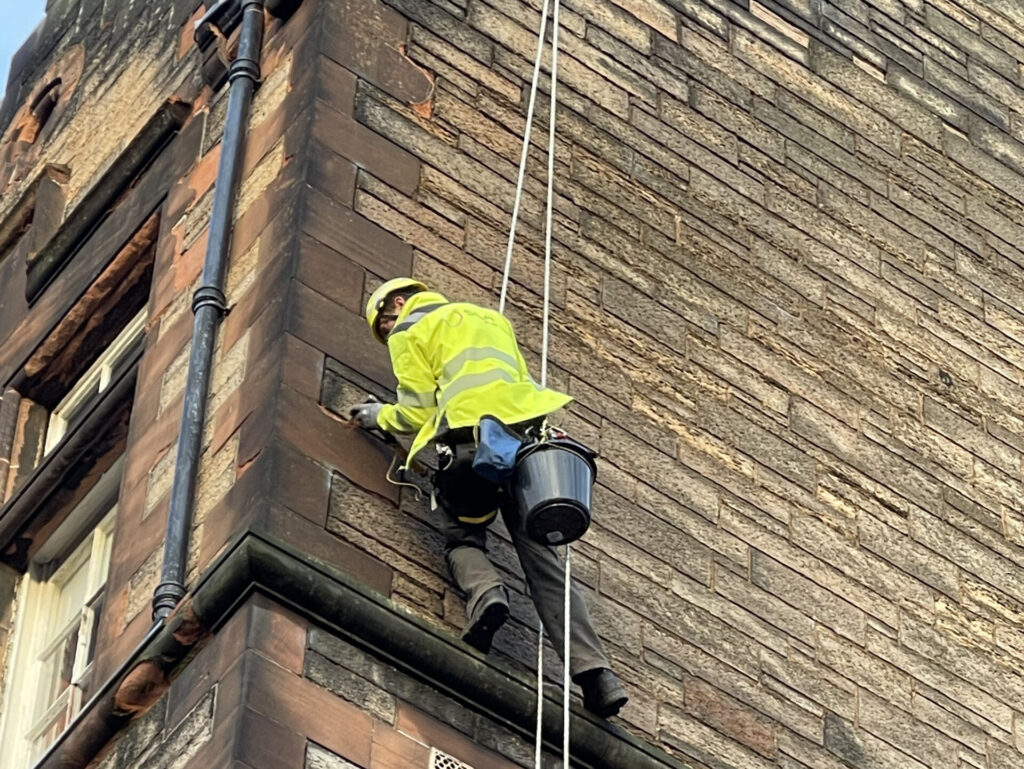
Rope access
Rope Access Services in Edinburgh
Rope access lets trained technicians reach high and awkward parts of a building on ropes instead of scaffolding. For localised work on tall tenements, rear elevations, chimneys and façades it is often quicker to set up, less disruptive and lower cost. The technician who reaches the defect carries out the repair, so on most small jobs there is no need for a second visit by a different trade.
- No scaffolding where it suits
- Roofs, gutters & masonry
- IRATA trained technicians
- Fully insured
What we do by rope access
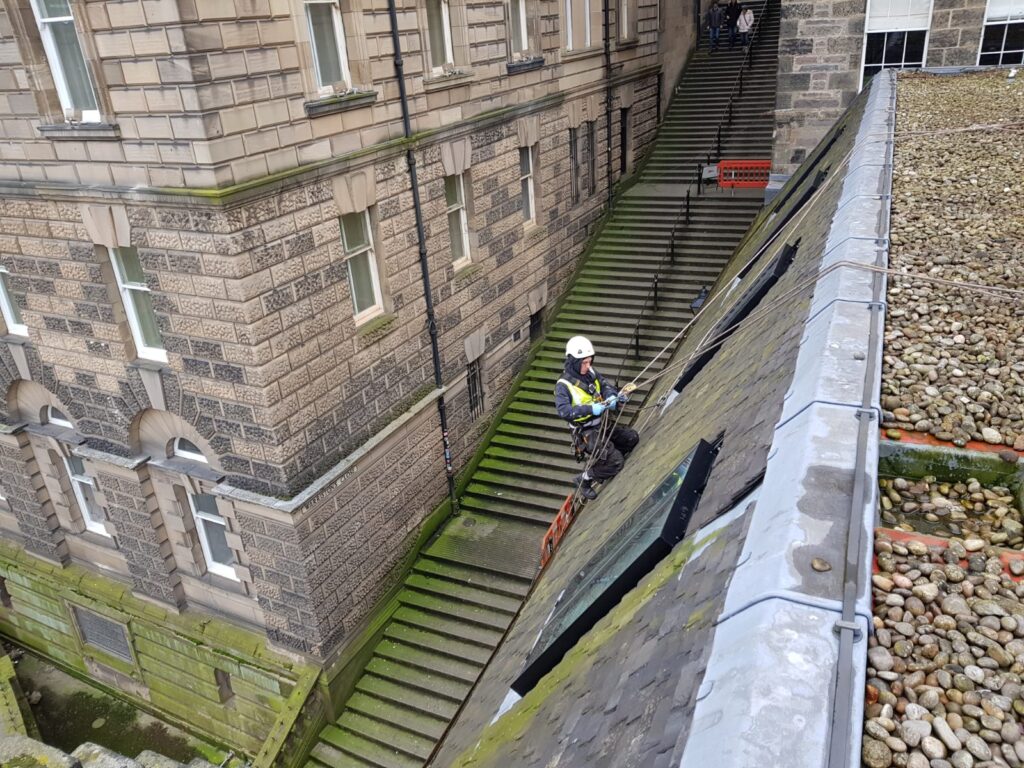
Roof repairs
Slipped slates, lead flashings, valleys, ridges, chimney flashings and leak tracing.
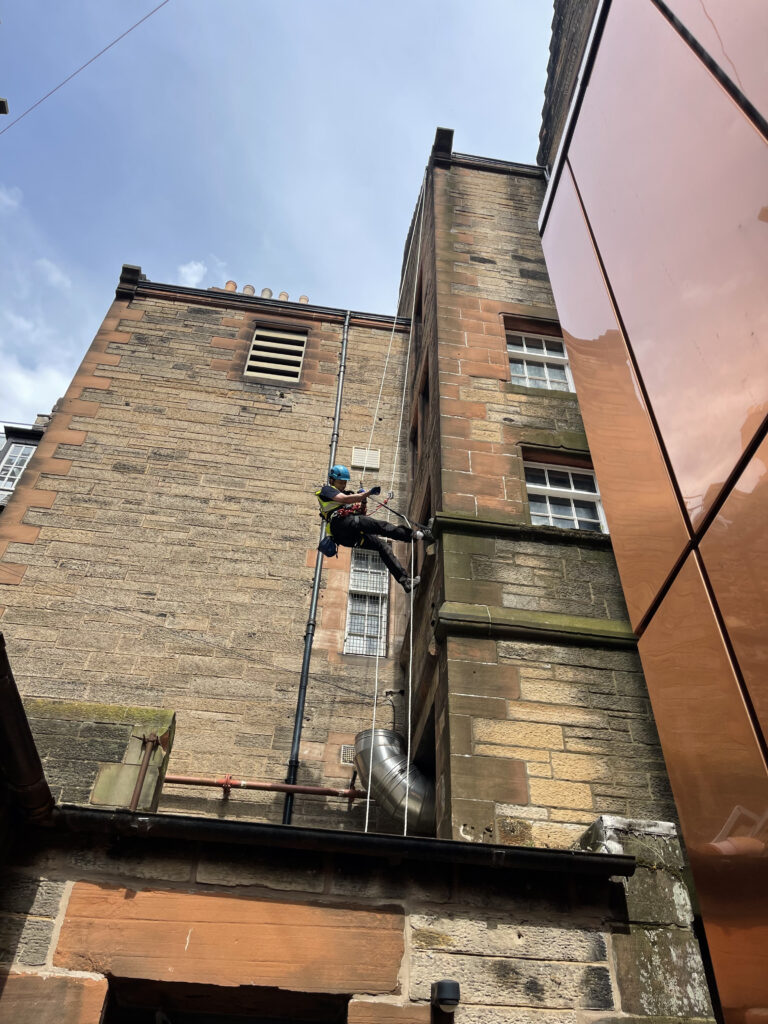
Building and façade repairs
Pointing, stone repairs, chimney and parapet work, and making safe loose masonry.
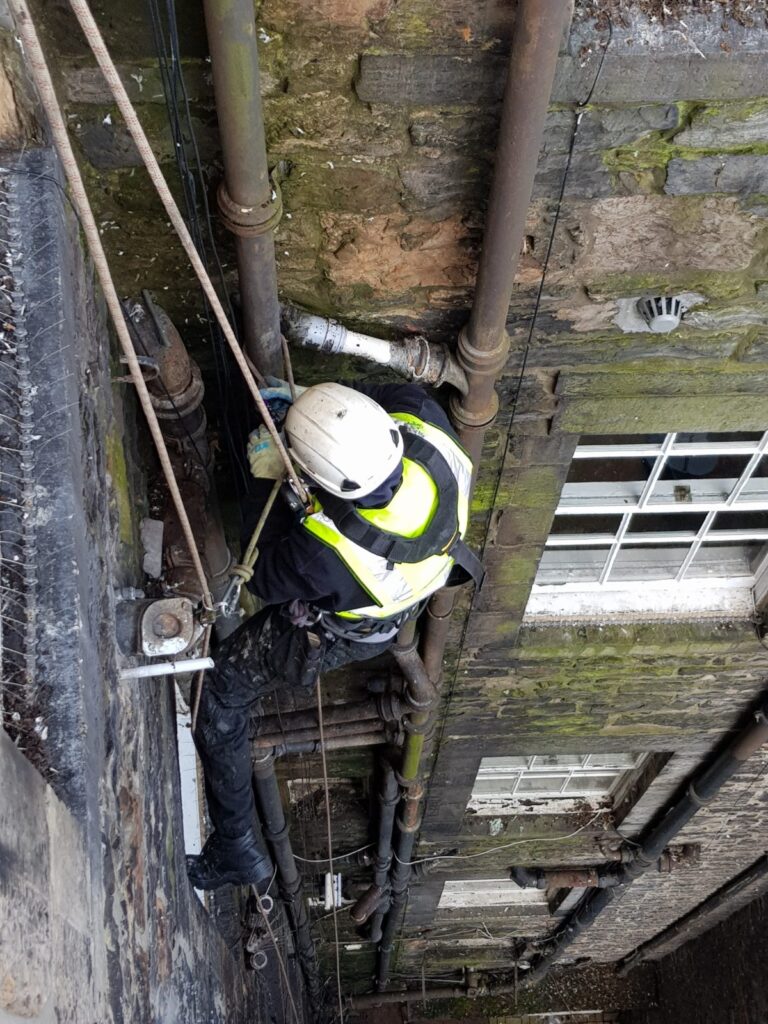
Inspections
Close-up roof and building inspections with photo reports.
Planned maintenance
Regular roof maintenance visits without scaffolding.
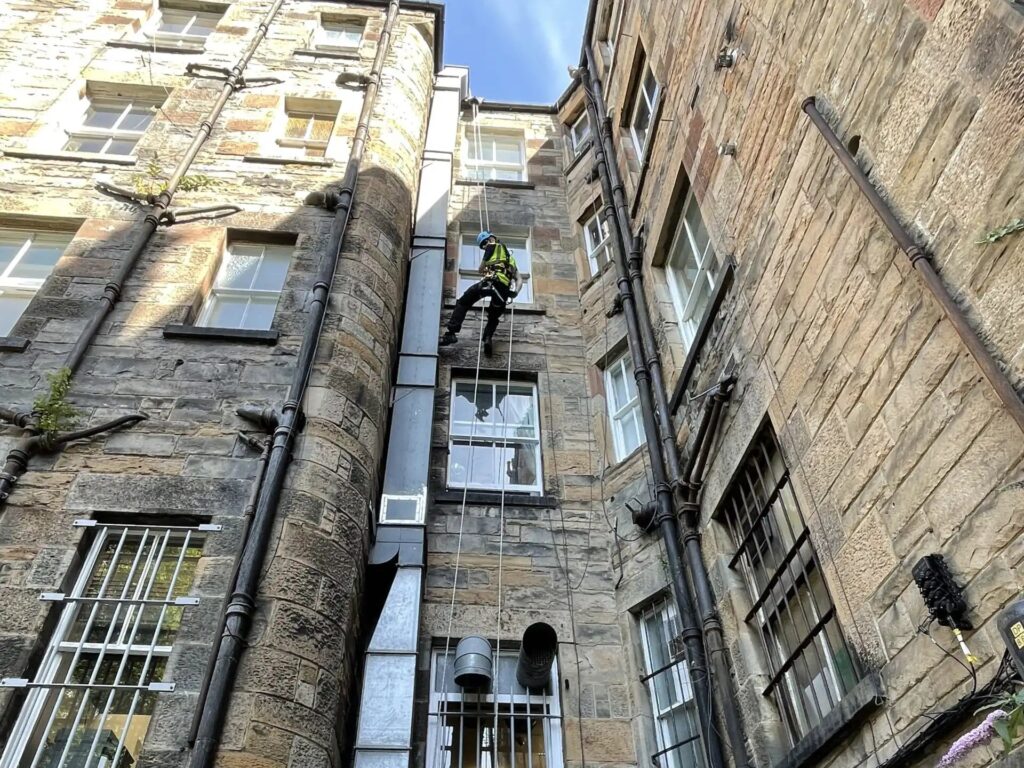
When rope access is the right choice
- The work is localised, such as a few slates, one flashing or a section of gutter.
- The building is tall, or the area is hard to scaffold (rear elevations, back greens, narrow closes).
- Scaffolding would block a pavement or shopfront for longer than the job itself.
- You need an inspection to find out what is wrong before committing to bigger work.
When scaffolding is better
- Full roof replacement or large areas of re-slating
- Major chimney rebuilds
- Long jobs where materials need to be stored at height
- Buildings with no safe anchor points
If scaffolding is the right answer we will say so and price it.
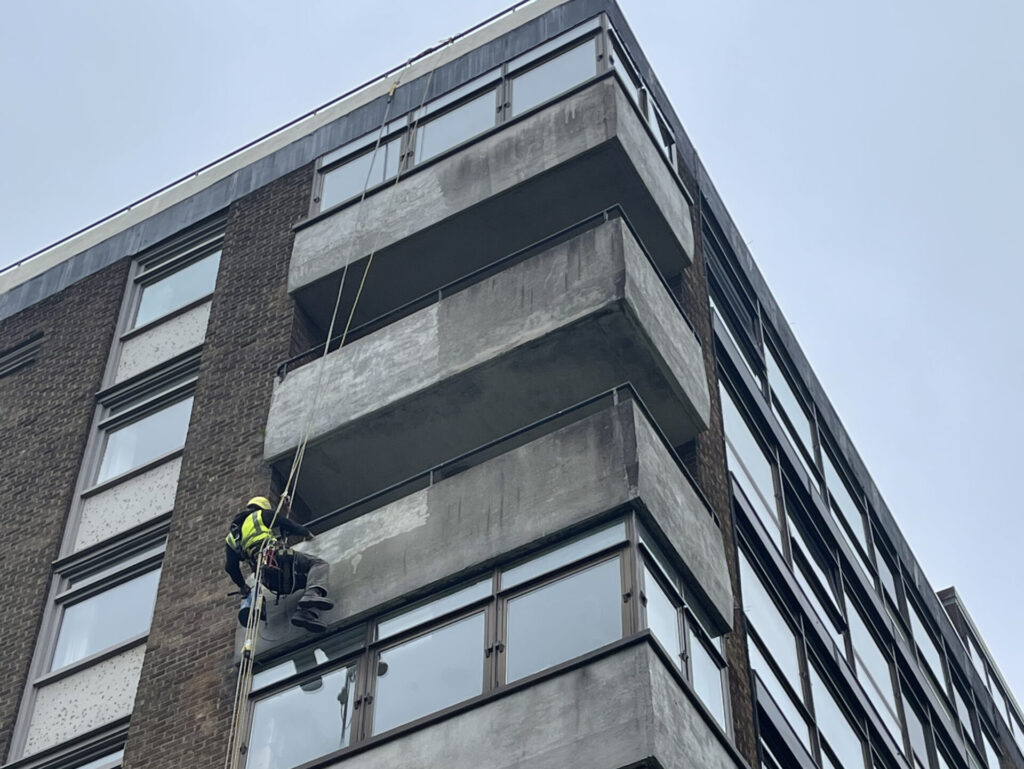
Choosing access
Rope access, scaffolding or a powered platform?
We start with the repair, then choose the access that suits it. Each method has a place, and on some jobs the right answer is a mix.
| Rope access | Scaffolding | Powered access (MEWP) | |
|---|---|---|---|
| Best for | Localised repairs and inspections on tall or awkward elevations | Re-roofing, long jobs, heavy materials, whole elevations | Low and mid-height work where a machine can get close |
| Set-up | Usually within hours | Days to design and erect, and may need a permit on a public pavement | Same day, if there is space and firm ground for the machine |
| At ground level | A small controlled area below the work | A structure on the pavement, garden or back green for the length of the job | The machine and its outriggers, plus a working zone |
| At height | A technician on two ropes with tools and small materials | A full working platform, with room to store materials | A basket with a limited load |
| Limits | Not suited to heavy materials or long programmes of work | Cost and time out of proportion to a small repair | Reach, ground conditions, and access to back greens and closes |
If scaffolding or a platform is the better option for your building, we will tell you and price it that way.
Why rope access suits Edinburgh
Edinburgh has thousands of four- and five-storey tenements, steep roofs and rear elevations that are difficult and expensive to scaffold. Scaffolding over a pavement also needs a council permit and can take weeks to arrange. Rope access often avoids that delay and avoids drilling scaffold ties into historic stonework.
Safety and competence
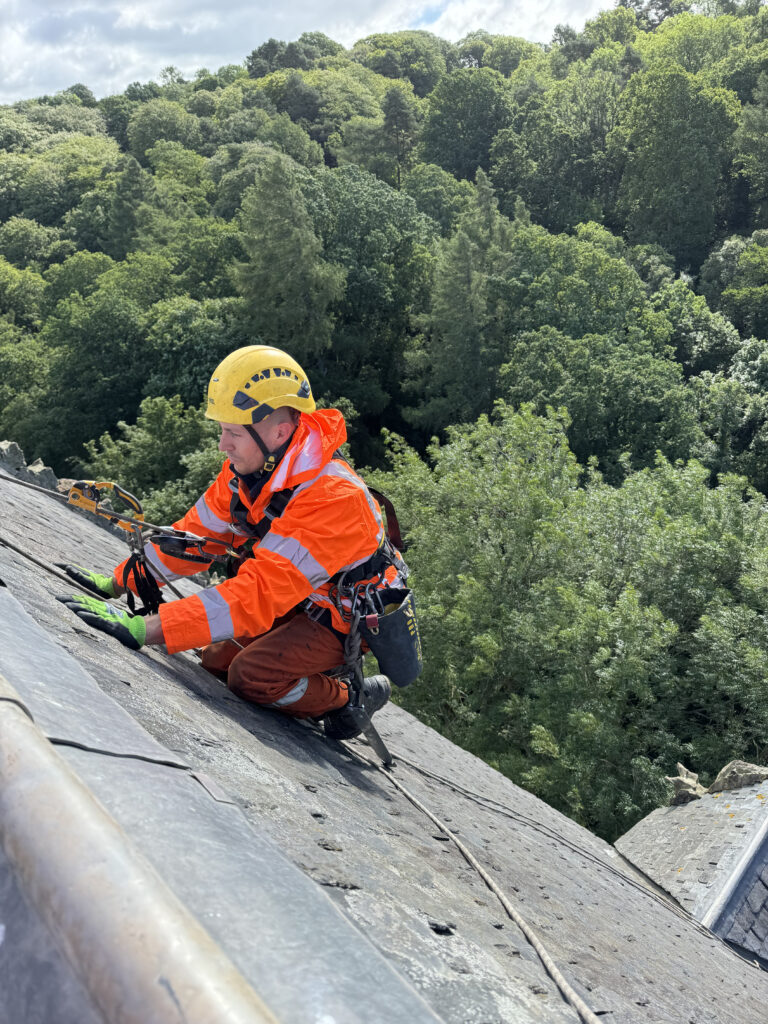
Rope access technicians on our jobs are IRATA trained, and all rope access work is supervised by IRATA Level 3 technicians and carried out to the IRATA International Code of Practice. We hold £5 million public liability and £5 million employer’s liability insurance, and certificates are available on request.
Where we work above a pavement we set up an exclusion zone to protect the public.
What is rope access?
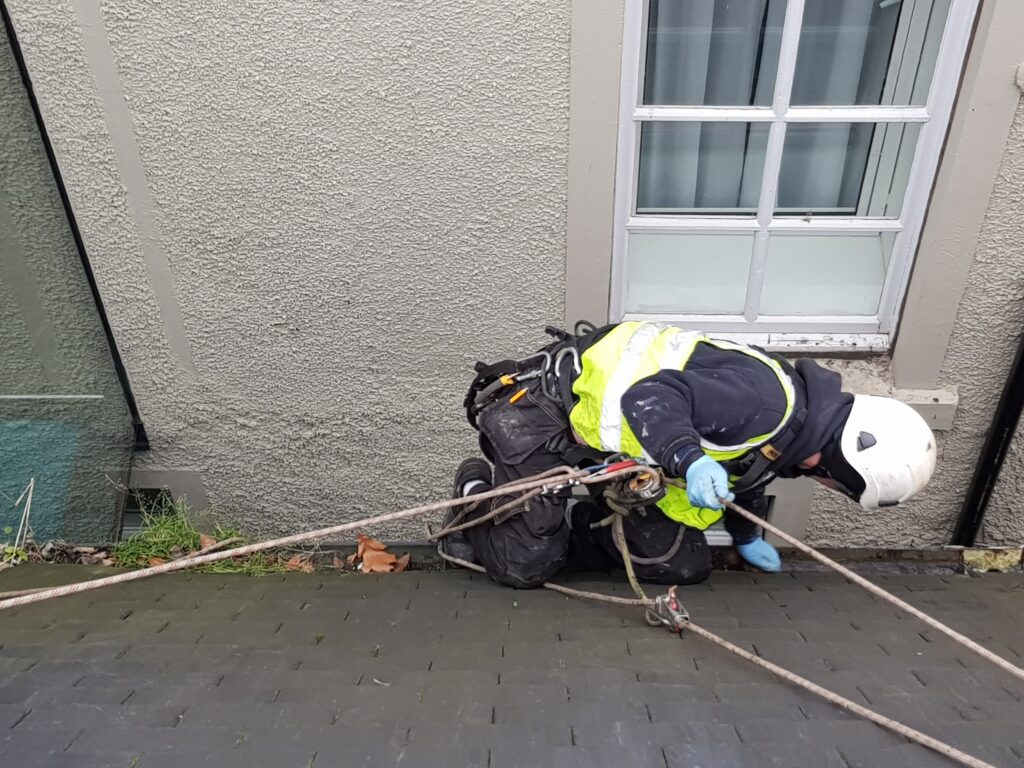
Rope access is a method of working at height where technicians use two independent ropes, a working line and a back-up safety line, each with its own anchor. It is widely used on buildings, bridges and offshore structures. In the UK the main industry body is the Industrial Rope Access Trade Association (IRATA), which trains and grades technicians at Levels 1 to 3.
How we plan rope access work
Every job starts with a look at the building, the anchor points and what is below the work area. We set up a controlled area at ground level and keep the public and residents clear while we work. Every job also has a rescue plan, as the IRATA code of practice requires. When the job is done, ropes and barriers come down, usually the same day.
Written quoteThe work, materials and access method explained
PhotosBefore and after photos of the work
GuaranteedWorkmanship guarantee confirmed in writing on your quote
£5 millionPublic liability and employer’s liability insurance
FAQs
Frequently asked questions
Is rope access safe?
Yes, when carried out by trained technicians to a recognised code of practice. Each technician is attached to two independent ropes at all times.
Is rope access cheaper than scaffolding?
For short, localised jobs it usually is, because there is no scaffold to hire, erect and dismantle and no scaffold permit. For large or long jobs scaffolding can be the better value. We will compare both where it matters.
Can rope access be used on listed buildings?
Yes. It usually needs no fixings into the façade, and ropes are padded where they run over stonework to protect it.
Do you need permission to work by rope access in Edinburgh?
Rope access does not need a scaffold permit, but work above a public pavement still needs suitable public protection, which we organise.
How much does rope access cost?
It depends on the height, the anchor points, the work and how long it takes. Send us the address and photos and we will advise.
Related services
Get a quote
Tell us about the job and send a photo if you can. We cover Edinburgh and the surrounding areas.